Incredibly, this is a fact!
The District of Columbia has a “one-party consent” wiretapping law. This means that in our nation’s capital, it is not a crime to record a phone call or conversation as long as at least one party to the conversation consents. See D.C. Code § 23-542. However, a person having a conversation via telephone, Skype, etc., with someone in another state may be breaking the wiretapping law in the other state.
Can You Legally Record Conversations in California Without Everyone’s Consent?
Is it legal to record a phone call or in-person conversation in California without the other person knowing? Unlike Washington D.C.’s permissive one-party consent approach described above, California Penal Code Section 632 establishes one of America’s strictest recording laws by requiring all parties to any confidential communication to consent before recording can occur lawfully.
California law treats unauthorized recording as the crime of eavesdropping, which prosecutors can charge as either a misdemeanor or felony depending on the circumstances. First-time offenders face up to one year in county jail and $2,500 fines, while repeat violators face enhanced penalties reaching $10,000 fines plus potential state prison sentences up to three years. The statute defines “confidential communication” broadly as any conversation where participants have an objectively reasonable expectation of privacy, including telephone calls, private office discussions, and conversations in homes.
Here’s the practical consequence that surprises many Californians: recording your own phone conversation with another person without their knowledge violates California law even when you’re a participant in that conversation. California courts have repeatedly held that consent from just one party is insufficient—every single participant must know about and agree to the recording. Important exceptions exist under Penal Code 633.5 for victims gathering evidence of violent felonies, extortion, bribery, or kidnapping, but recordings made outside these narrow exceptions remain inadmissible in court and expose the recorder to both criminal prosecution and civil liability under California law.
Does this mean Presidents can legally record private conversations in the White House?
Yes, they can. After firing FBI Director James Comey, President Donald Trump tweeted, “James Comey better hope that there are no ‘tapes’ of our conversations before he starts leaking to the press!” This led to speculation that perhaps all or some of President Trump’s conversations inside the White House were being recorded. Since then, the Administration has absolutely refused to discuss or confirm whether Trump is recording conversations. But Trump’s associates say he has a long history of recording people.
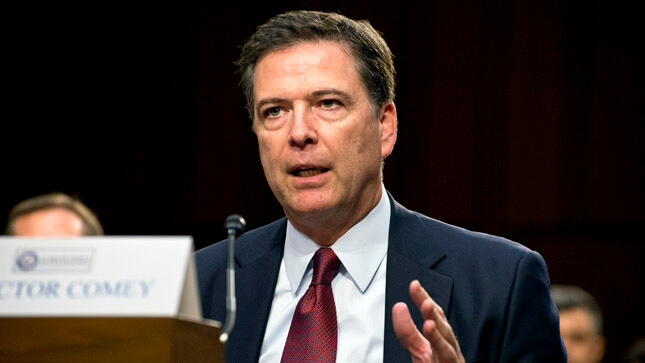
Image Source: thehill.com
Which other Presidents recorded conversations? Richard Nixon is the most famous and recorded most extensively, but Franklin D. Roosevelt, John F. Kennedy, Lyndon B. Johnson, and Ronald Reagan all recorded at least some White House conversations. In fact, for most of his term, Reagan also recorded White House meetings on video.
Nixon’s taping system was quite advanced for its day. The system in the Oval Office was voice-activated, and would not turn on when Nixon was away from the White House. Nixon also installed recording systems specifically for the Oval Office phone, his office in the Old Executive Office Building, in the Cabinet Room, at the Camp David retreat, and in the Lincoln Sitting Room in the private residence.
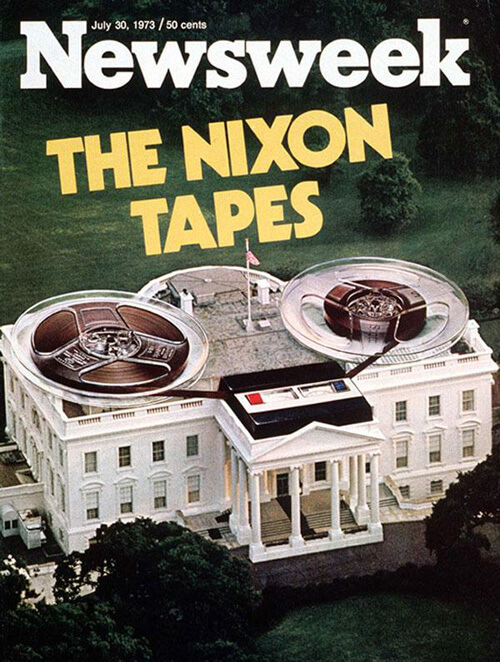
Image Source: Newsweek
Nixon was eventually forced to resign due to the surfacing of a taped June 23, 1972, conversation between Nixon and H.R. Haldeman in which Nixon agreed to use the CIA to block the FBI’s investigation into the Watergate break-in, because it was considered proof of obstruction of justice. Nixon was never charged for actually recording conversations due to Washington D.C.’s one-party consent wiretapping law.
Can the President’s Recorded Conversations Be Subpoenaed?
Yes! Not only can the President’s recorded conversations be subpoenaed in criminal or Congressional investigations, the administration is required to preserve them as a public record, in accordance with the 1978 Presidential Records Act. The recordings would theoretically become subject to Freedom of Information requests after a president left office.
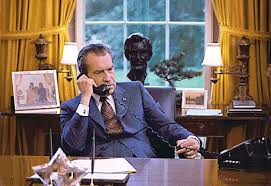
Image Source: nytimes.com
In fact, the ability to subpoena the recorded conversations is probably why the White House is refusing to confirm their existence. When Nixon considered refusing to comply with a Supreme Court order to turn over the tapes, he nearly provoked a constitutional crisis.
What do you think? Do you think Trump is secretly recording conversations? Should these records be subpoenaed?